
Independent by design,
Queer Ink was founded in Mumbai in 2010 by Shobhna S Kumar as India's first online queer bookstore. What began as a response to the difficulty of finding queer books in India has evolved into an independent publishing, archival, and knowledge organisation dedicated to documenting, preserving, and sharing queer lives, histories, and literature. Over the years, Queer Ink has expanded from bookselling into publishing, archives, a digital library, editorial writing, and public knowledge exchange. While the work has grown and changed, its purpose has remained constant: to make queer stories, histories, and knowledge more visible, accessible, and enduring. Today, Queer Ink bridges the gap between historic preservation and public discovery, creating vital pathways through which queer lives and experiences can be documented, preserved, and carried forward.
What we do.
Why We Exist
Queer lives in India have often been under-published, under-documented, and under-preserved.
Stories have disappeared. Records have been lost. Books have gone out of print. Community histories have remained scattered across personal collections, organisational archives, and individual memories.
Queer Ink exists in response to these gaps.
We believe that literature, archives, and access matter deeply. Publishing creates new knowledge—archives preserve memory—and libraries make that knowledge discoverable. Together, these elements allow ideas to circulate, evolve, and reach new audiences.
Our work is guided by a simple commitment: to strengthen the record of queer India and to make it easier for people to find, engage with, and contribute to that record. We are building not only for today’s readers, writers, researchers, and community members, but also for those who will come looking years from now.
Why we work this way.
How We Work
Queer Ink is independent by design.
The work develops through long-term relationships with writers, researchers, contributors, collection donors, institutions, and community organisations. Some projects take months; others take years. We prioritise trust, care, accessibility, and thoughtful stewardship over speed or scale.
Our work is sustained through publications, partnerships, grants, donations, memberships, services, and community support. This independence allows us to focus on long-term public value while respecting the privacy, wishes, and expectations of contributors, collaborators, and collection holders.
We also embrace a practice of Pay It Forward.
Much of what makes this work possible has been shared by others—knowledge passed on, introductions made, stories entrusted, books donated, opportunities opened, time offered, and resources contributed. Queer Ink exists because of countless acts of generosity, both visible and unseen.
Where possible, we seek to continue that cycle by making knowledge more accessible, supporting emerging writers and researchers, preserving materials for future generations, and creating opportunities for others to participate in and contribute to the work.
Some contribute expertise. Some contribute materials. Some contribute time, encouragement, connections, or financial support. Each contribution helps strengthen a shared body of knowledge that extends beyond any single project or individual.
We believe that knowledge, opportunity, and resources grow through circulation. Paying it forward is one way we put that belief into practice.
Ultimately, we believe that meaningful work requires patience, continuity, and sustained attention.
"Our voices shatter the silence we inherited, so the future must never know the choice of the closet."
Shobhna S Kumar — founder.
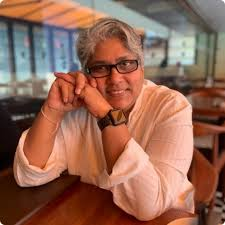
Leadership
Shobhna S Kumar founded Queer Ink in 2010 and has spent more than fifteen years building initiatives that connect publishing, archives, and public knowledge.
Born in Fiji and raised partly in Australia, Shobhna has been based in Mumbai since 2002. In 2012, Queer Ink published Out! Stories from the New Queer India, edited by Minal Hajratwala, which became one of the landmark anthologies of contemporary queer Indian writing. Since then, she has expanded the organisation’s scope to encompass oral history, digital access, and institutional community documentation.
Working at the intersection of publishing and archives, Shobhna focuses on creating structural pathways for queer stories to be safely held and widely shared. Her work is grounded in the belief that literature and historic preservation play an essential role in how communities understand their past, recognise themselves in the present, and imagine their futures.
Team.
Community & Collaborators
Queer Ink has always been shaped by collaboration.
Over the years, writers, editors, archivists, researchers, librarians, designers, translators, students, volunteers, institutions, and collection contributors have all played vital roles in the development of this work.
Some collaborations have resulted in books. Others have contributed to archival collections, oral histories, research projects, educational initiatives, public programs, and the growth of the Digital Library. We are profoundly grateful to the many individuals and organisations who have shared their knowledge, records, expertise, and trust along the way.
While Queer Ink remains founder-led, it is sustained and strengthened by a wider community committed to keeping queer Indian history alive.
Press and media.
Connect With Us
We welcome conversations with writers, researchers, archivists, educators, librarians, institutions, community organisations, funders, and potential partners whose interests intersect with literature, history, and public knowledge.
Whether you would like to explore a collaboration, contribute materials to the Archives, discuss a publishing project, invite Shobhna to speak, request an interview, support the work, or simply begin a dialogue, we would be pleased to hear from you.
- Email: shobhna@queer-ink.com
Annual report.
11. Queer Ink publishes an annual report each April, marking the imprint’s founding date. The report covers the year’s work — books published, archive collections expanded, library growth, QConversations engagement, and finances at a level appropriate to a small independent organisation.
Read the annual reports:
2025 (PDF)
·
2024 (PDF)
·
2023 (PDF)
·
Earlier reports on request