ABOUT QUEER INK
Read how we make decisions in our Editorial Policy.
Independent by Design. Since 2010.
Queer Ink works across publishing, relationship-archiving, a digital library, and knowledge exchange.
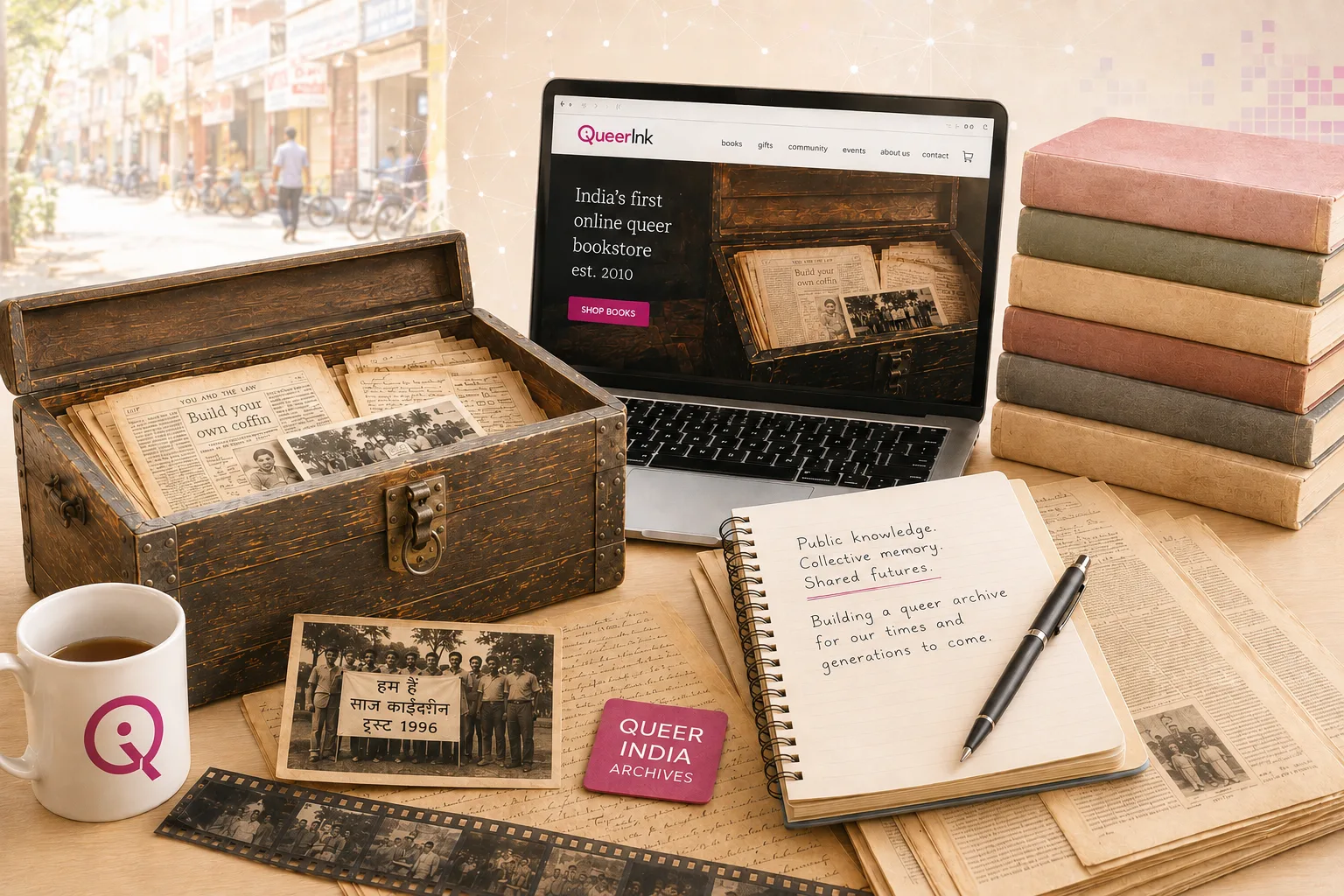
Founded in Mumbai in 2010 by Shobhna S Kumar as India’s first online queer bookstore, Queer Ink was established in response to the difficulty of finding queer books in India. While the work has grown and changed, its purpose has remained constant: to create, document, preserve, and share queer lives, stories, histories, and knowledge — making them more visible, accessible, and enduring.
Four Connected Areas of Work
Publishing
Creating and bringing queer books, ideas, and voices into the world — from the first concept to the published work.
Archiving
Preserving queer histories, memories, and cultural records through relationship-archiving — with the people and communities who created and care for them.
Knowledge Exchange
Connecting queer lives and stories through conversations, collaborations, and the exchange of ideas and knowledge.
Digital Library
Making queer books, archives, and knowledge discoverable and accessible through a growing digital collection.
How We Work
Our work develops through long-term relationships with writers, researchers, contributors, collection donors, institutions, and community organisations. Some projects take months; others take years. We prioritise trust, care, accessibility, and thoughtful stewardship over speed and scale.
This independence allows us to focus on long-term public value while respecting the privacy, wishes, and expectations of collaborators and collection holders. We sustain our work through publications, partnerships, grants, memberships, donations, services, and community support.
We believe that meaningful work requires patience, continuity, and sustained attention to ensure that queer lives remain visible within India’s cultural and historical record.
Gratitude
Many people have shaped Queer Ink by sharing their time, knowledge, creativity, expertise, records, trust, and support.
Writers, editors, archivists, researchers, librarians, designers, translators, students, volunteers, institutions, community organisations, and those who have entrusted us with their collections have all contributed in different ways.
Whether through a book, an archive, a conversation, a collaboration, a record, an introduction, or simply an act of trust, each contribution has become part of Queer Ink’s continuing story.
Thank you